
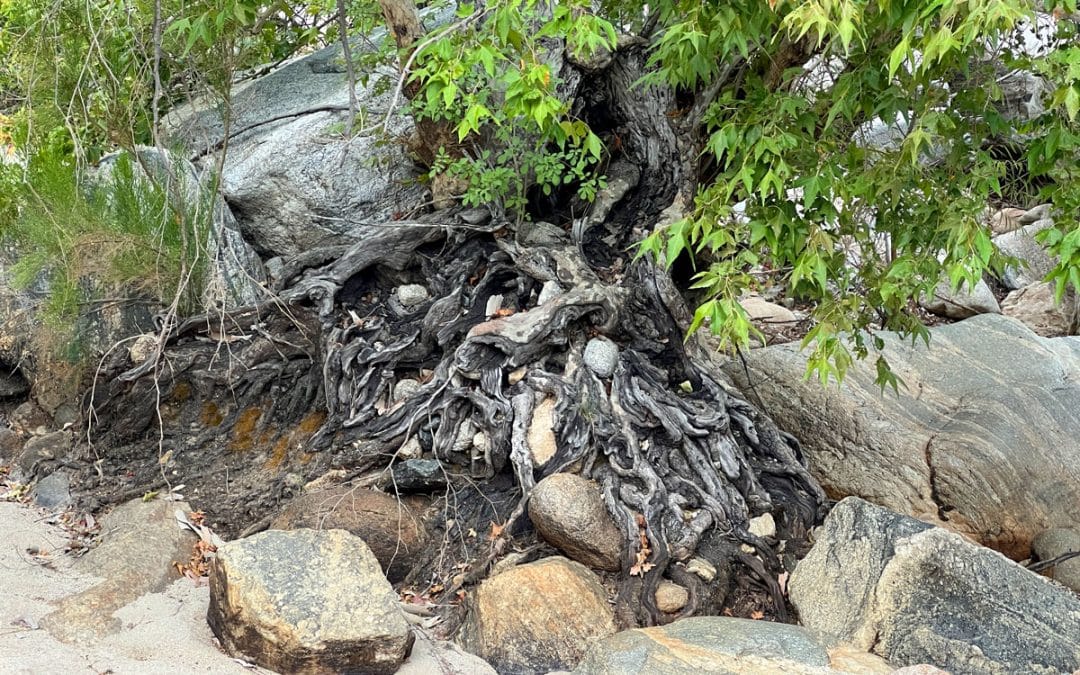
There’s a wise saying that the only constant is change. The world, and our bodies, are in a constant state of flux, though we do not realize it. For example, scientists tell us that our skin cells are all replaced every few weeks! The mountains that seem eternal are constantly being worn away, one tree root and raindrop at a time.
Sometimes, of course, change happens much more quickly. Mudslides, avalanches, fires, and volcanic eruptions can change mountains in moments. In our personal lives, one illness or accident can change the trajectory of our lives.
This happened recently in the life of an elder friend, who fell in her church’s parking lot and broke her upper arm. Because she lives alone, she’s recovering in a rehab facility, where she can receive the assistance she needs with daily care while her arm is immobilized, slowly healing.
This time has led her to revisit her self-understanding. She has realized that the “independent” life, alone in her own home, is no longer meeting her needs. She has realized how precious it is to have people around her, caring for her and visiting her. Surprisingly, time in rehab is enriching her life.
As a result, she’s releasing an old understanding of herself as homeowner and preparing to move into a communal living situation. She will have her own apartment, so some level of independence remains, but she will also easily be able to connect and share meals with other residents—and have a safety net in place for whatever might happen next.
I’m thinking it’s important to periodically revisit our understandings, our assumptions, about our lives. Are we really living our “best life”? If not, what gets in the way—perhaps even things we once held in high esteem? After all, being a homeowner is the American Dream, right? Except…perhaps we outgrow those dreams. Perhaps we regularly need to examine our lives and ask what needs to change.
Another pithy quote, which Plato attributed to Socrates, is “The unexamined life is not worth living.” Examining my life has certainly led to major changes. Some clear examples include getting divorced, being trained as a spiritual director, and becoming a solopreneur. Each of those choices involved releasing old understandings of myself. They continue to lead me in directions I could not have imagined. I regret none of them, even as they each involved loss.
What self-understandings might you need to examine and potentially release?


Shirin, loved “an unexamined life is not worth living.” A willow tree pops to mind; when I am bending the ways of groups I may be in or friends I am with, why do I do that? Needs to be a question or where am I in all of this? Perusing or evaluating our lives enables us to grow and become real contributors wherever we are.
Oh yes, Anne. I’m glad that quote spoke to you. It is important to ask why we do what we do…blessings on your asking, and listening.
Peace,
Shirin
Love it and it maps to some of my own journey.
I think the idea of re-framing is also helpful. We re-frame some of our self-understandings.
For example, I’m a writer is a big leap for me (because I’m not a grammarian). However, I’m a storyteller is a reframe that feels much more natural for me.
Congratulations on this beautiful example of reframing, and thank you for sharing it with us, Damien. I appreciate the reminder that it isn’t always about letting go of the thing itself, but rather about how we view and envision it….
Peace,
Shirin
All I can think of tonight is the wisdom from my Benedictine friends: “Always we begin again”. To do that well it is important to look back and look forward with honest brave hearts and minds. I liked the notion of “reframing” and just asking the question “am I living my best life?”
Yes, Joyce, the wisdom of always beginning again is important, and we do need to be honest with ourselves. I’m glad the “best life” question speaks to you.
Peace,
Shirin